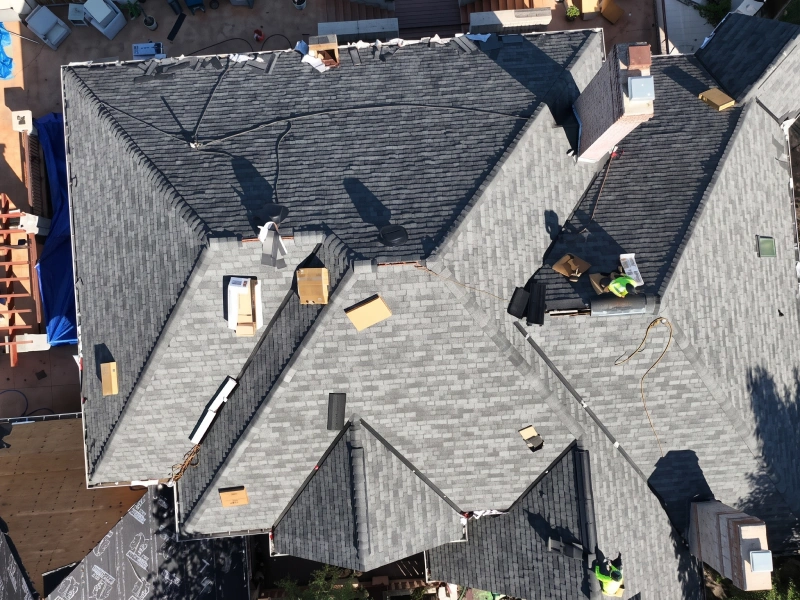
The Insurance Industry’s 10-Year Rule: What It Means for Your Coverage
Insurance carriers treat a roof as a depreciating asset from the moment it is installed. Every roofing material carries a manufacturer-rated lifespan: asphalt shingles typically last 15 to 30 years, metal roofing 40 to 70 years, and tile or slate 50 years or longer. The industry uses these timelines to calculate depreciation, and the 10-year mark is where many policies shift from Replacement Cost Value (RCV) to Actual Cash Value (ACV) coverage.
RCV coverage pays the full cost to replace your roof today, regardless of its age. ACV coverage subtracts depreciation, meaning the payout reflects the roof’s diminished value based on years of service. A 12-year-old asphalt shingle roof with a 20-year expected lifespan might receive only 40 percent of replacement cost under ACV terms. That gap comes out of your pocket.
Once a roof crosses the 10-year threshold, carriers often require a professional inspection as a condition of renewal. Without documentation showing the roof is in serviceable condition, some insurers will decline to renew the policy altogether. Others impose higher deductibles for wind and hail claims or shift the entire roof to ACV terms. In Ballwin, MO, where summer storms and winter freeze-thaw cycles accelerate wear, undocumented roofs face heightened scrutiny. Adjusters assume neglect unless maintenance records prove otherwise.
Consider two scenarios: a homeowner files a hail claim on an 11-year-old roof with no inspection history. The adjuster finds granule loss and minor flashing separation, concludes the damage is pre-existing wear, and denies the claim. Another homeowner files the same claim but provides annual inspection reports showing the roof was in good condition before the storm. The claim is approved. The difference is documentation, not the roof itself.
Why Roof Condition Matters More Than Age on Your Insurance Renewal
Two roofs installed the same year in the same neighborhood can end up in vastly different condition by year eight or nine. Age is just a number on a policy. Actual condition depends on storm exposure, ventilation, debris accumulation, foot traffic from service calls, and whether minor damage was repaired promptly or ignored.
Material-specific wear indicators reveal the real story. On asphalt shingles, granule loss exposes the underlying mat to UV degradation and water infiltration. On flat or low-slope membrane systems common in commercial properties, seam separation and ponding water signal imminent failure. Metal roofs develop rust at fastener penetrations or panel seams if sealant isn’t maintained. Slate and tile roofs crack under foot traffic or from fallen branches. Flashing around chimneys, skylights, and vents deteriorates first, often years before the field of the roof shows visible wear.
Insurers cannot distinguish a well-maintained roof from a neglected one based on age alone. Without documentation, adjusters default to the assumption that no maintenance occurred. This works directly against the property owner during claims. A roof inspection report that includes dated photographs, material-specific findings, and a professional assessment of remaining useful life provides the evidence carriers need to approve coverage and honor claims.
Maintenance agreements that schedule recurring inspections carry significantly more weight than a single inspection performed years after installation. A continuous record demonstrates ongoing stewardship. It shows the property owner monitored wear, addressed minor issues before they became major failures, and kept the roof in insurable condition. That documented history can be the difference between policy renewal and nonrenewal, especially as the roof approaches or crosses the 10-year mark.
What a Thorough Roof Inspection Report Must Include for Insurance Purposes
An insurance-grade inspection report is not a checklist. It is a detailed, photo-documented assessment that provides underwriters and adjusters with the specific information they use to make coverage decisions. The strongest reports include five core elements: the date and recorded condition at the time of inspection, material-specific wear indicators, evidence of prior repairs and their quality, the condition of flashing and drainage systems, and a professional estimate of remaining useful life.
Photographs matter more than narrative descriptions. Images should capture the overall roof condition, close-ups of wear points (granule loss, seam condition, fastener integrity), flashing at all penetrations, and drainage paths on flat or low-slope systems. A written report without visual documentation holds less weight during claim disputes.
Material-specific findings demonstrate that the inspector understands what to look for. On asphalt shingle roofs, this means documenting granule retention, seal integrity, and any curling or buckling. On TPO or EPDM membranes, it means seam condition, punctures, and ponding water areas. On metal roofing, it means fastener tightness, panel alignment, and corrosion at vulnerable points. On slate or tile, it means cracked or displaced units and the condition of the underlayment where accessible.
Evidence of prior repairs tells the insurer whether problems were addressed promptly and properly. A repair done with the wrong materials or improper technique can void coverage for future damage in that area. A well-documented repair, with before-and-after photos and materials specified, reinforces that the property owner takes maintenance seriously.
Flashing, penetrations, and drainage are the most common failure points and the most scrutinized during claims. Insurers frequently exclude coverage for damage caused by deferred maintenance in these areas. A roof inspection that documents their condition at regular intervals provides the evidence needed to prove a claim resulted from a covered event, not neglect.
The remaining useful life estimate gives the carrier a professional opinion on how much service the roof has left. This is particularly important for roofs approaching the 10-year mark. A licensed contractor in Ballwin, MO, familiar with local weather patterns and typical wear rates, can provide a credible assessment that supports continued RCV coverage or renewal on favorable terms.
When to Schedule Inspections: A Proactive Timeline That Protects Your Policy
The most effective inspection strategy is scheduled and proactive, not reactive. Waiting until a problem is visible or a renewal notice arrives leaves little room to address issues before they affect coverage. A structured timeline builds the documentation insurers expect and catches small problems before they become expensive claims.
Immediately after installation, schedule a baseline inspection. This confirms the work was completed correctly, starts the documentation record on day one, and provides a reference point for all future assessments. Many installation defects do not become apparent until the first major storm or temperature cycle, and a baseline report establishes what was delivered versus what developed later.
Annual inspections, or inspections after any major storm, catch the kind of minor damage that escalates quickly if ignored. A few missing shingles after a windstorm, a small puncture in a membrane roof from a fallen branch, or a separated flashing seam can all be repaired inexpensively if found early. Left unaddressed, they become leaks, interior damage, and disputed claims. In Ballwin, MO, where summer thunderstorms bring high winds and hail, and winter freeze-thaw cycles stress roofing materials, annual inspections are particularly important. Missouri weather accelerates wear in ways that differ significantly from drier or milder climates.
Every three to five years, schedule a more thorough condition assessment. This should include a full photo-documented report, material-specific wear analysis, and an updated remaining useful life estimate. These reports are useful for maintenance planning and insurance renewal conversations. They give you advance notice if the roof is approaching the point where repairs or replacement will be necessary, and they provide the carrier with current, credible information about the asset they are insuring.
Well before year 10, ensure a documented inspection history is already in place. Most carriers apply their strictest scrutiny right at the 10-year mark. Having a clear record of ongoing maintenance before that threshold gives you a materially stronger position on coverage type, premiums, and claim outcomes. Scrambling for an inspection after receiving a nonrenewal notice is far less effective than having years of records already on file. Property owners who establish a maintenance agreement early avoid this problem entirely.
Received a Nonrenewal Letter? Here Is Your Step-by-Step Action Plan
A nonrenewal notice from your insurance carrier is stressful, but it is rarely the end of the road. Insurers are required to provide advance notice, typically 30 to 60 days depending on the state, and that window is your opportunity to act. The fastest path to resolution is almost always the same: obtain a professional inspection report and use it to either reverse the nonrenewal with your current carrier or secure coverage elsewhere.
First, read the letter carefully to identify the specific reason and the deadline. Some notices cite roof age alone. Others reference visible damage, prior claims, or a lack of maintenance records. Knowing exactly what triggered the notice determines what needs to be addressed.
Second, schedule a professional roof inspection immediately. A detailed, photo-documented report is the single most useful document you can produce in response to a nonrenewal. It gives your agent something concrete to submit to the underwriter: actual condition, not just age on file. Many carriers will reconsider if a licensed contractor certifies the roof has adequate remaining useful life, often stated in years such as five or more years of service remaining.
Third, ask your agent whether the carrier accepts inspection reports to reverse or delay the nonrenewal. This is not guaranteed, but it is common enough to be worth pursuing before assuming you must switch carriers. If the inspection turns up legitimate issues such as worn flashing, granule loss, or ponding on a flat roof, get repair estimates and address those items quickly. Documenting that repairs were completed can be a condition the carrier sets for keeping you on the policy.
Fourth, shop the policy in parallel. Do not wait to find out if the appeal works. Roof age nonrenewals are common enough that many carriers and managing general agents write policies specifically for older roofs, sometimes at a higher premium or with an ACV roof endorsement. Start obtaining quotes as soon as you receive the letter, not after a denial, so you are not left without coverage if the timeline is tight.
Fifth, if the inspection reveals the roof is genuinely at the end of its service life, get a replacement estimate. A replacement, though a larger upfront expense, resets the insurance clock and can actually lower your premium compared to maintaining an aging roof with an ACV endorsement. In some cases, replacement is the most cost-effective long-term decision.
Finally, keep every document. The inspection report, repair invoices, and all correspondence with your agent become part of your roof’s insurance record going forward. This is the same kind of documentation history that prevents future nonrenewal issues, built under time pressure instead of proactively.
If you have received a nonrenewal letter and need an expedited inspection in Ballwin, MO, or the surrounding service area, contact a local roofing contractor who understands insurance requirements and can deliver a report quickly. A thorough, credible inspection is the tool that gives you leverage with your carrier and options in the market. Schedule that inspection now, and you will have the documentation you need before the deadline closes.